
Measure the wall first, then open the catalog
Almost every piece of storage furniture sent back went back for one reason: it was bought from a photograph and measured afterwards. Ten minutes with a tape saves the whole round trip.
Take the span at floor level
Run the tape along the floor between whatever the case has to sit between: two door frames, a wall and a radiator, a corner and the edge of a window. Take it at floor level rather than at waist height, because that is where the baseboard, the pipe and the skirting all live and where the case is widest in practice. If the two ends of the wall give you different numbers, and in an older house they will, write down the smaller one and work from that.
Then take off a working margin. Two inches of slack across the whole span is enough to slide a case in without scraping paint off both walls, and it leaves you room to reach behind for a plug. A piece that fits with nothing to spare fits in the drawing and nowhere else.
Depth is the number that ruins rooms
Width decides whether the case goes in. Depth decides whether you can still walk past it. In a hallway or between a table and a wall, anything past sixteen inches starts to bite, and it bites worse once a chair is pushed back or a door swings in. Stand where you would walk, measure across to the wall and take the depth off that figure before you decide it is fine.
Remember that the depth on a listing is the case, not the case plus its handles, and not the case plus the inch a thick baseboard holds it off the wall. Both are small numbers that land on the same side of the equation.
Height, and everything above the spot
Look up before you buy. A light switch, a thermostat, a window sill, the bottom of a row of upper cabinets, a picture rail: any of them turns a perfectly good case into a piece that has to move six inches sideways. Measure from the floor to whatever is lowest and treat that as your ceiling.
Write all three numbers on your phone before you start browsing. Then press the smallest into the wall fit bench, and the catalog shortens itself to the pieces that clear it.
Pieces this applies to
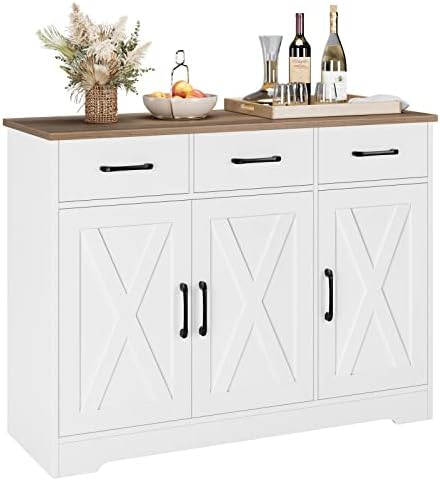
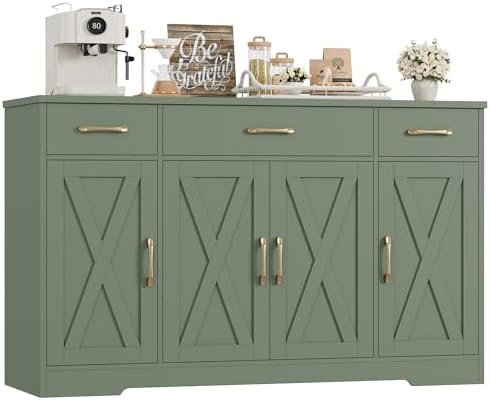
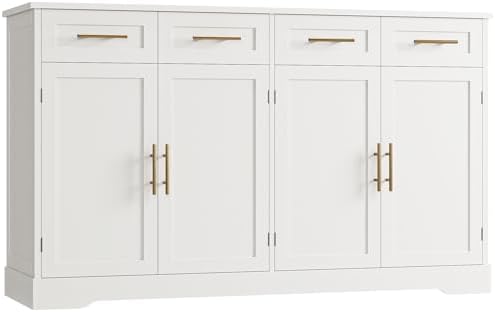
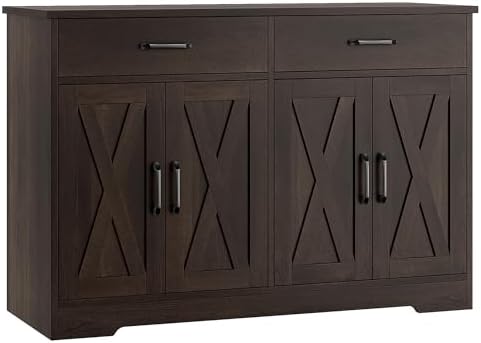
Sideboards run long, so they are the pieces that punish a guessed measurement hardest. These four are the most lived-with in the range.
More from the workroom
Baseboard, pipes and the gap behind a flat back
Why a flat-backed case never quite sits flush against an ordinary wall, and what to do about the inch it gives up.
Anchoring a tall case so it stays where you put it
Find the stud, use the bracket that came in the box, and understand why drywall alone is not an anchor.
An afternoon on the floor: how flat-pack assembly actually goes
Set up properly, sort the hardware first, and the case that looks like a two-day job goes together before dinner.