
Anchoring a tall case so it stays where you put it
The bracket in the bag is not packaging filler. On anything taller than it is wide, it is the part that decides whether a loaded case stays upright when a drawer is pulled all the way out.
Why a full drawer is the dangerous moment
A case is stable until its weight moves forward of its feet. Open the top drawer of a loaded pantry cabinet and you have just done exactly that. Add a child using the open drawer as a step and the piece will go over, no matter how heavy it is. Weight does not prevent tipping; a fixing to the wall does.
Find the stud
A screw into drywall alone holds a picture, not furniture. Standard framing sits at sixteen inches on centre, so once you find one stud you can measure across to the next. An electronic finder is quickest; failing that, tap along the wall and listen for the note to go from hollow to solid, then confirm with a fine nail somewhere the case will hide.
If the case is not standing where a stud is, use the bracket at the nearest stud even if it is off to one side. One screw into timber beats two into plasterboard. Where there is genuinely no stud in reach, a proper cavity fixing rated for the load is the fallback, and on a masonry or tiled wall get someone in who drills those for a living.
Fit it with the case in place
Stand the case where it is going to live, level it, then mark the wall through the bracket hole. Fix the bracket to the wall first and the case to the bracket second, with the strap left just short of taut rather than pulling the back panel out of square. Then load the shelves from the bottom up, heaviest at the bottom, and the piece will behave.
Check it once a year
Wood moves, screws seat, houses settle. Push gently on the top of the case at the change of seasons. If there is any give at the wall, the screw wants a quarter turn. It takes ten seconds and it is the only maintenance this ever needs.
Pieces this applies to
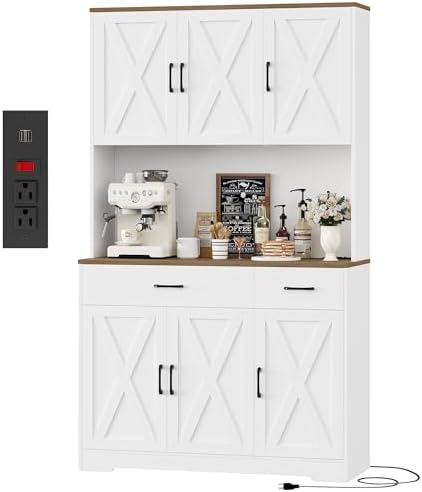
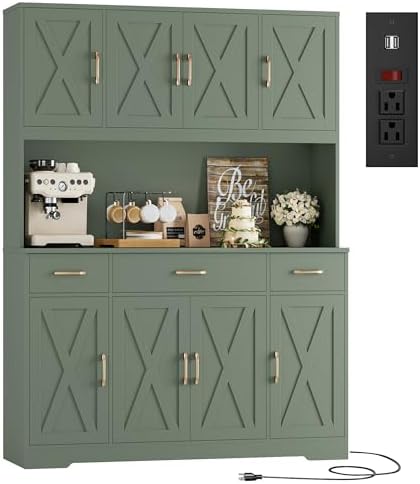
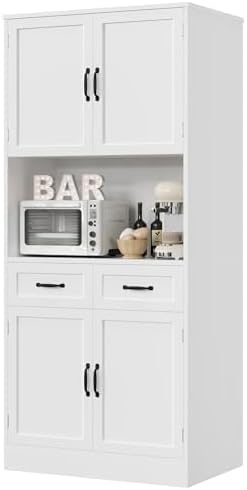
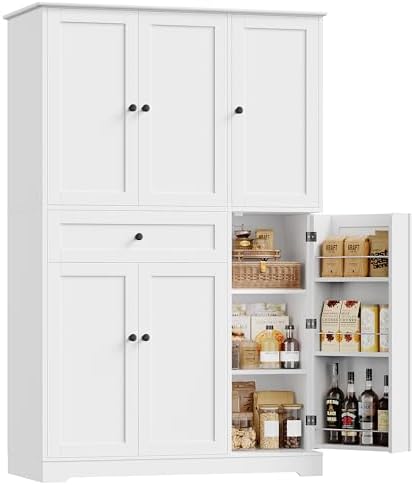
Tall pantry cases carry weight high and load unevenly, which is precisely the combination the anchor exists for.
More from the workroom
Measure the wall first, then open the catalog
The three numbers to write down before you look at a single photograph, and why the smallest of them decides.
Baseboard, pipes and the gap behind a flat back
Why a flat-backed case never quite sits flush against an ordinary wall, and what to do about the inch it gives up.
An afternoon on the floor: how flat-pack assembly actually goes
Set up properly, sort the hardware first, and the case that looks like a two-day job goes together before dinner.