
Getting doors and drawers to line up
A door that sits a little proud on one side is the case telling you something about the floor. Fix the floor first and the hinge adjustment becomes trivial.
Start under the case, not at the hinge
Put a level on the top, side to side and front to back. A case standing on an uneven floor racks very slightly out of square, and the front is where that shows: one door drops, the centre gap goes wedge-shaped, a drawer catches on one corner. Shim the low foot until the top reads true and half the problem usually disappears on its own.
While you are down there, check the back panel is fully seated in its groove all the way round. A back that has popped out at one corner leaves the whole carcass able to move, and no amount of hinge work will hold a door straight on a case that is still flexing.
Which screw does what
A concealed hinge adjusts on three axes and each has its own screw. The one nearest the door face moves the door left and right, closing or opening the centre gap. The one on the mounting plate slides the door in and out, setting how proud it sits. The plate screws themselves, loosened slightly, let the door move up and down.
Work one axis at a time and one door at a time, in quarter turns, closing the door to look after each. Adjusting two doors at once means you no longer know which change did what, and the usual result is both doors wrong in new ways.
Drawers
A drawer that binds is nearly always a runner that is not parallel to its partner. Pull the drawer, loosen the runner screws on one side, push the drawer back in to let it find its own line, then tighten. If it drops at the front instead, the runner has been fitted a hole too low on one side; move it up rather than trying to compensate at the other end.
Then leave it a week
A new case settles. Doors that were perfect on assembly day sometimes want a quarter turn once the piece has carried a load for a few days, and that is normal rather than a fault. Go round it once after a week and you will not need to think about it again.
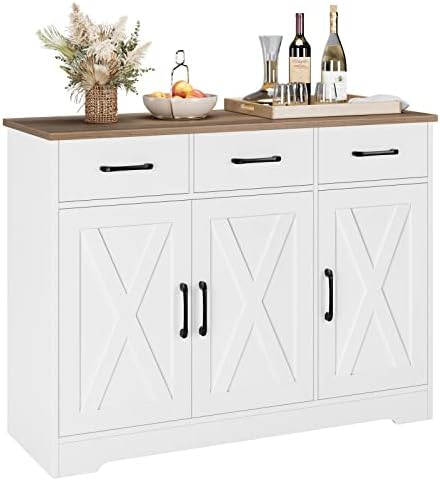
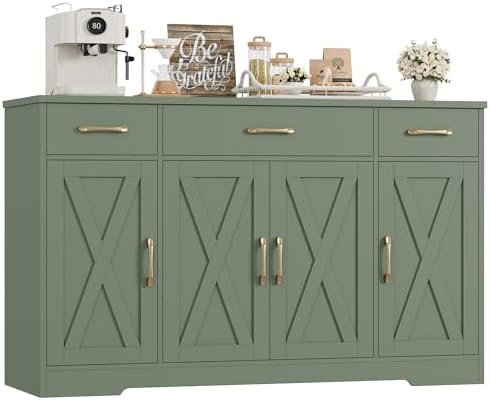
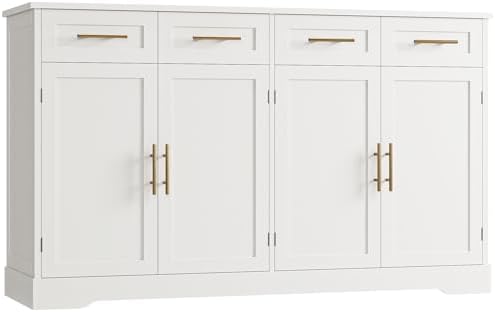
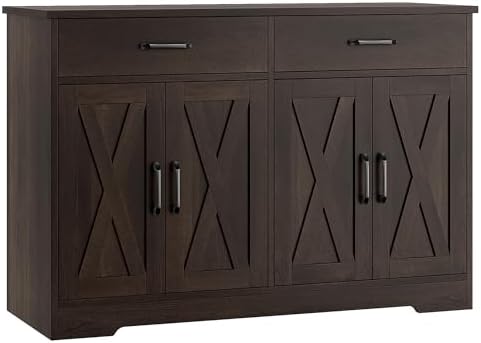
Pieces this applies to
Two-door cases show alignment more plainly than anything else, because the centre gap runs the full height of the front.
More from the workroom
Measure the wall first, then open the catalog
The three numbers to write down before you look at a single photograph, and why the smallest of them decides.
Baseboard, pipes and the gap behind a flat back
Why a flat-backed case never quite sits flush against an ordinary wall, and what to do about the inch it gives up.
Anchoring a tall case so it stays where you put it
Find the stud, use the bracket that came in the box, and understand why drywall alone is not an anchor.